
For user-defined variable, we can either define it as site variable or page variable. $.Param reads page variable first. If it doesn’t exist, then read site variable.
Version
Hugo 0.91
Page
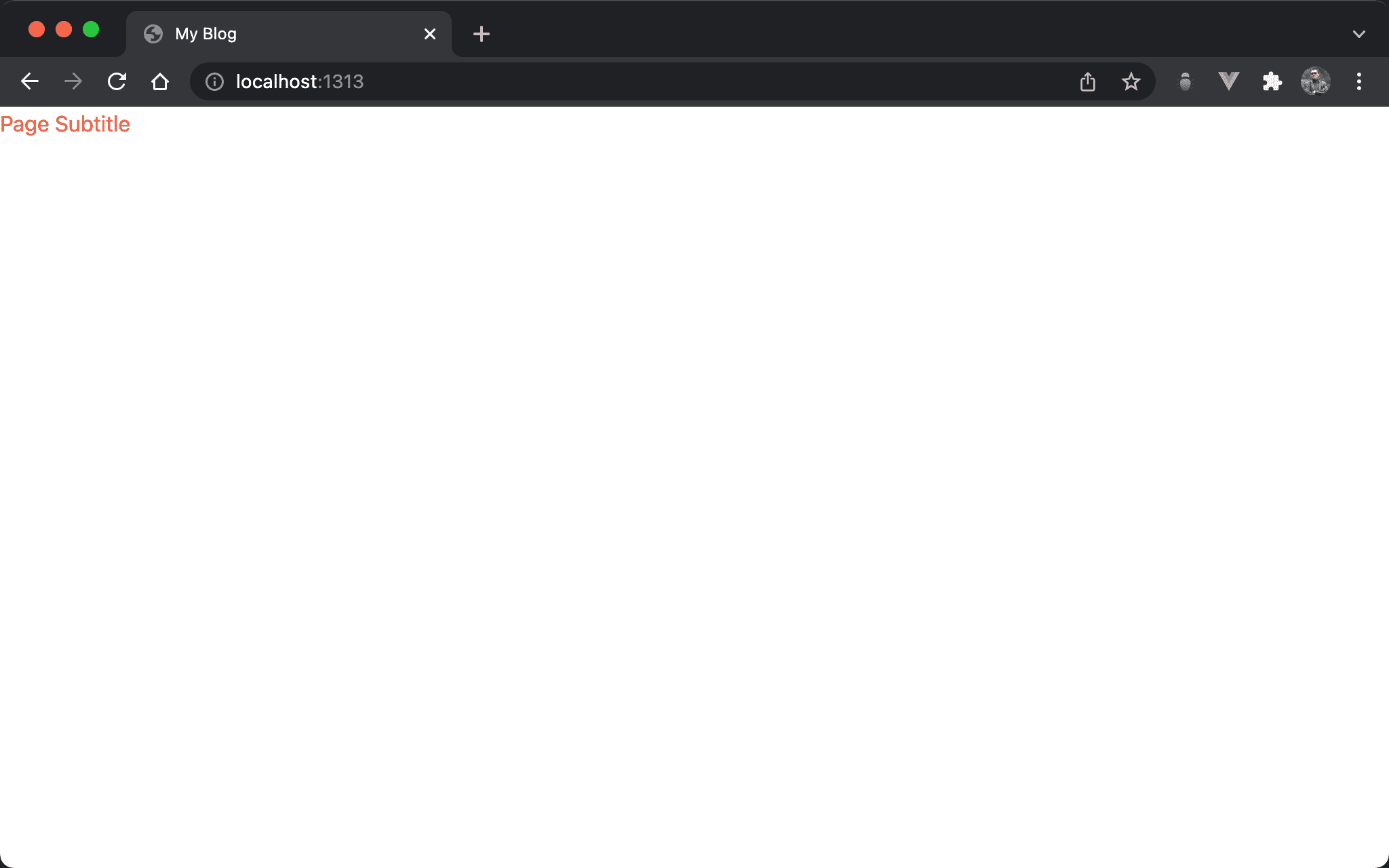
The page shows Subtitle, which is a page variable.
Page Variable
content/_index.md
---
title: My Blog
description: Hello World
subtitle: Page Subtitle
---
title: default page variable defined by Hugodescription: default page variable defined by Hugosubtitle: user-defined page variable
Site Variable
config.json
{
   "baseURL": "http://example.org/",
   "languageCode": "en-us",
   "title": "My New Hugo Site",
   "params": {
      "subtitle": "Site Subtitle",
   },
}
title: default site variable defined by Hugosubtitle: user-defined site variable
$.Param
layouts/index.html
<!DOCTYPE html>
<html lang="en">
  <head>
    <meta charset="UTF-8" />
    <meta name="viewport" content="width=device-width, initial-scale=1.0" />
    <script src="alpine.js" defer></script>
    <link rel="stylesheet" href="output.css" />
    <title>{{ .Title }}</title>
  </head>
  <body>
    <p class="text-red-500">{{ .Param "Subtitle" }}</p>
  </body>
</html>
Line 11
<p class="text-red-500">{{ .Param "Subtitle" }}</p>
.Param : provide the subtitle page variable and falls back to the subtitle site variable if the page variable is not present
Conclusion
.Parammakes the codebase clean and concise