
ECMAScript 的 Array.prototype 亦提供 slice() 取得部分 Array,也可套用在 Array-like object。
Imperative
let data = [1, 2, 3, 4, 5]

let slice = begin => end => arr => {
  let result = []

  for(let i = 0; i < arr.length; i++)
    if (i >= begin && i < end)
      result.push(arr[i])

  return result
};

slice(1)(3)(data) // ?
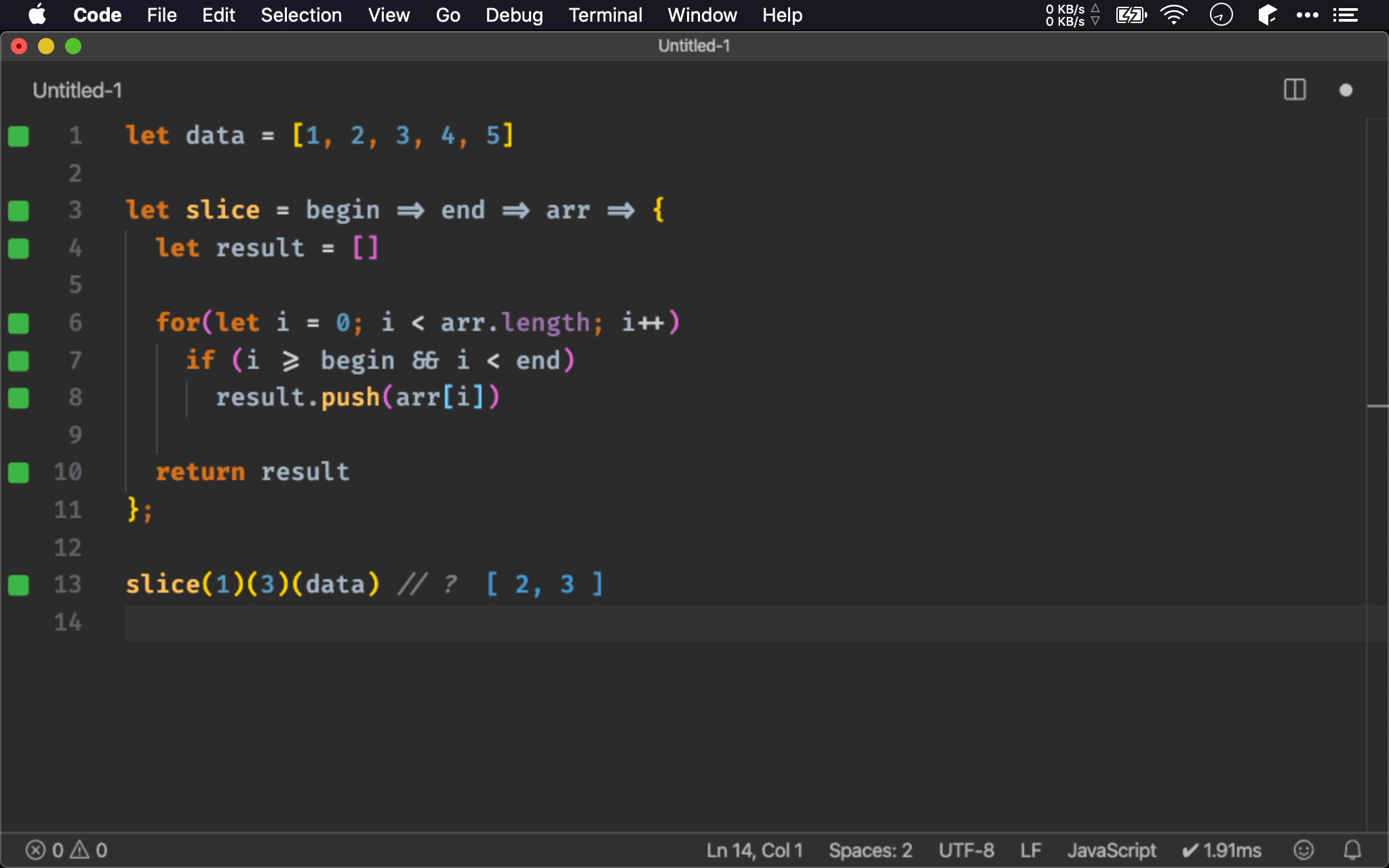
Imperative 會先建立欲回傳的 result array,使用 for loop 搭配 if 判斷,若 index 在傳進的 begin 與 end 之中,則塞進 result 中。
slice()
let data = [1, 2, 3, 4, 5]

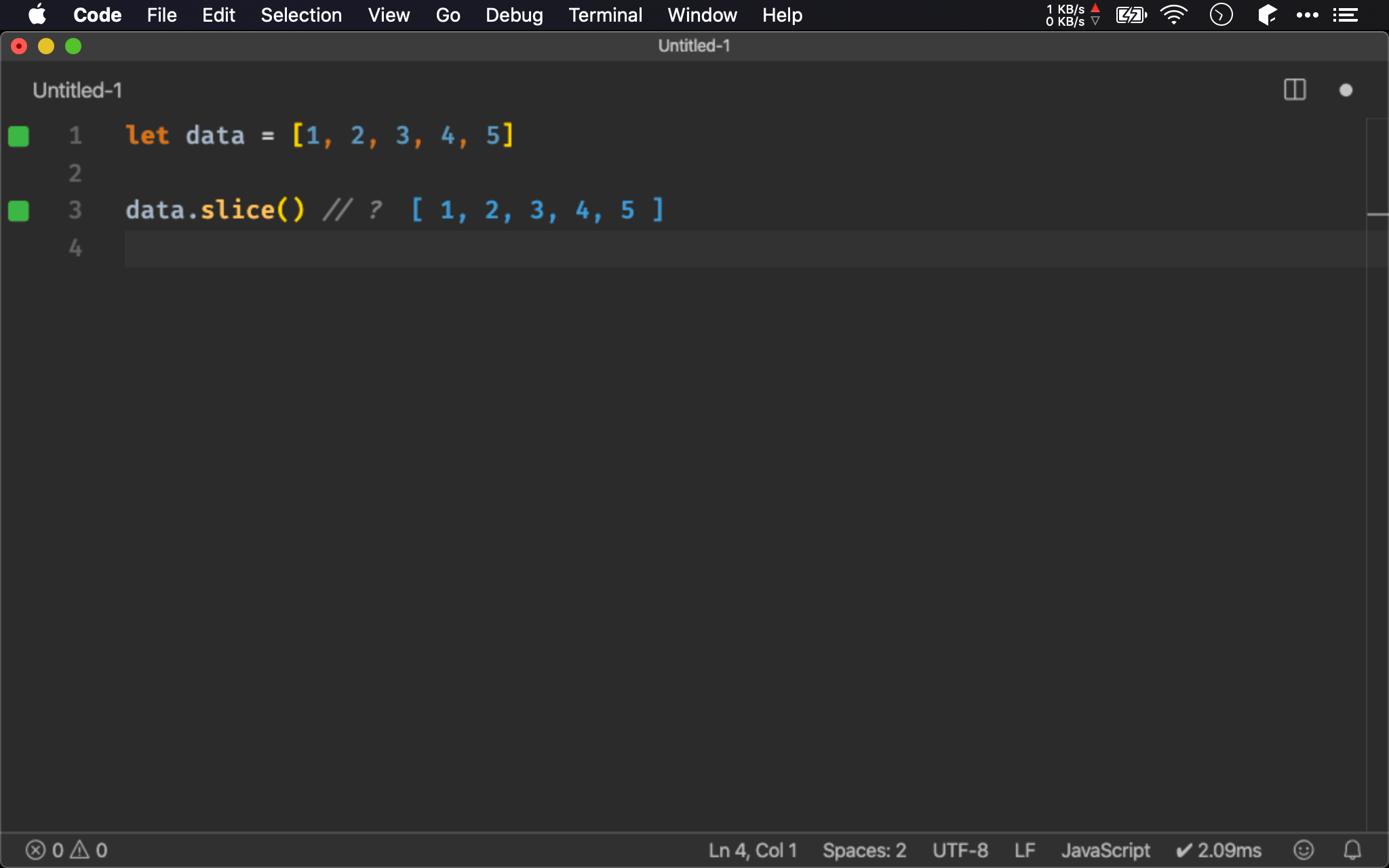
data.slice(1, 3) // ?
ECMAScript 原生的 Array.prototype 已內建 slice(),可直接使用。
arr.slice([begin[, end]])
取得部分 array
begin:array 的起始 index
end:array 的結束 index (但不包含)
let data = [1, 2, 3, 4, 5]

data.slice(1, -2) // ?
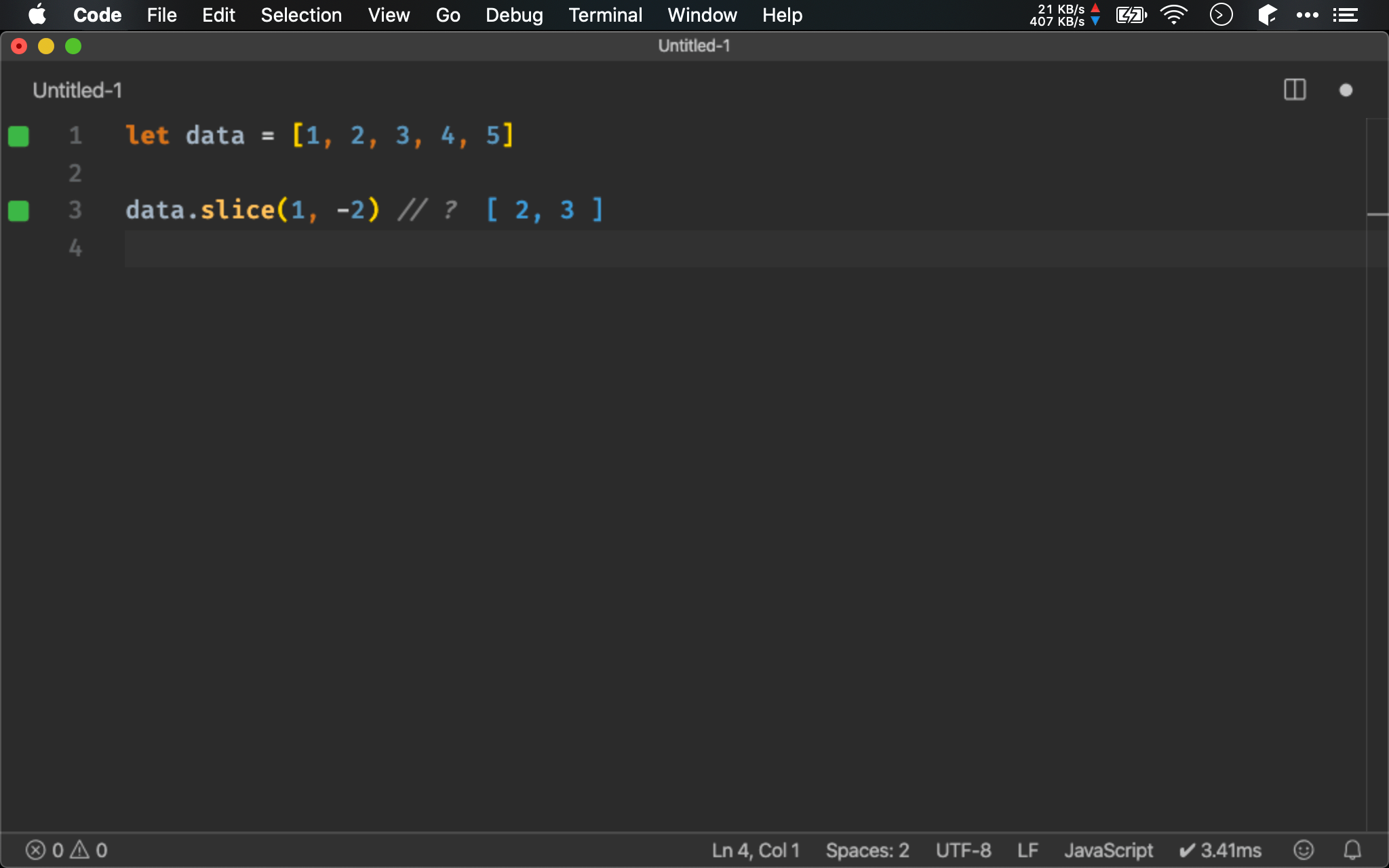
Index 也可以傳入負數,其中 -1 就是最後一個 element,-2 就是倒數第二個 element,以此類推。
let data = [1, 2, 3, 4, 5]

data.slice() // ?
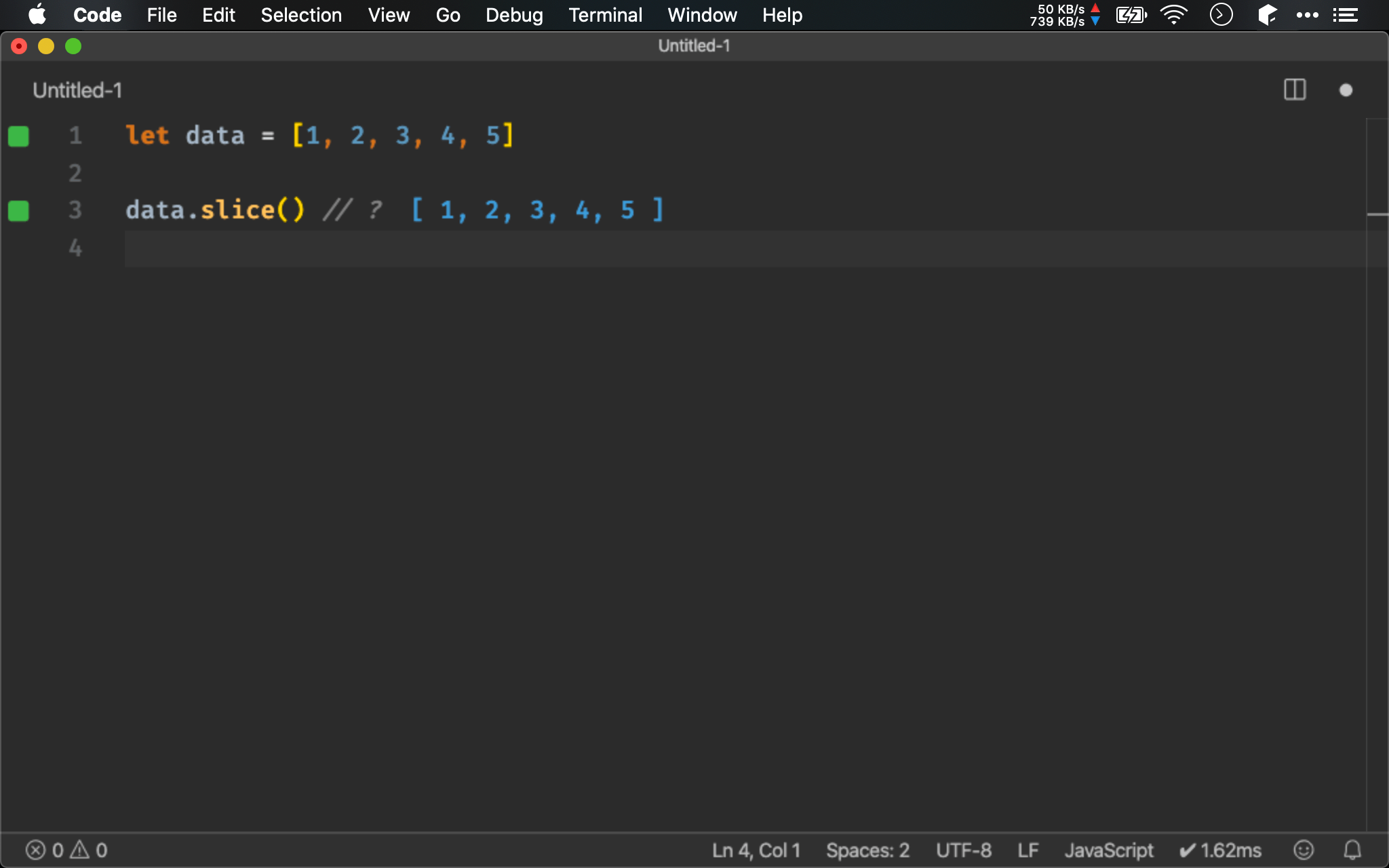
若 slice() 不提供任何 argument,則相當於 shallow copy 完整 array。
Array-like object
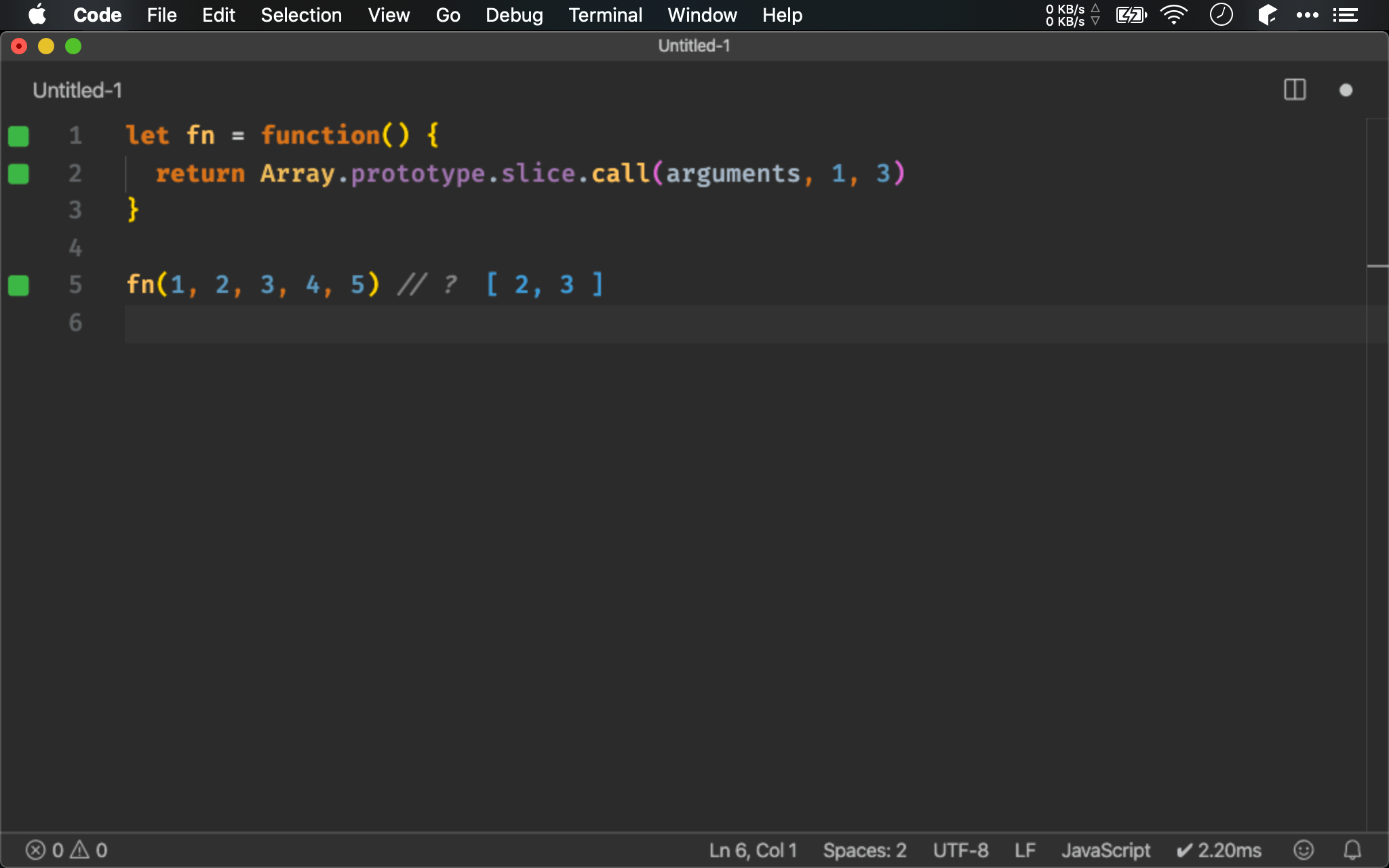
let fn = function() {
  return Array.prototype.slice.call(arguments, 1, 3)
}

fn(1, 2, 3, 4, 5) // ?
透過 Array.prototype.slice().call(),slice() 也可套用在 array-like object。
只有 function declaration 與 function expression 可用
arguments,arrow function 不行
let fn = function() {
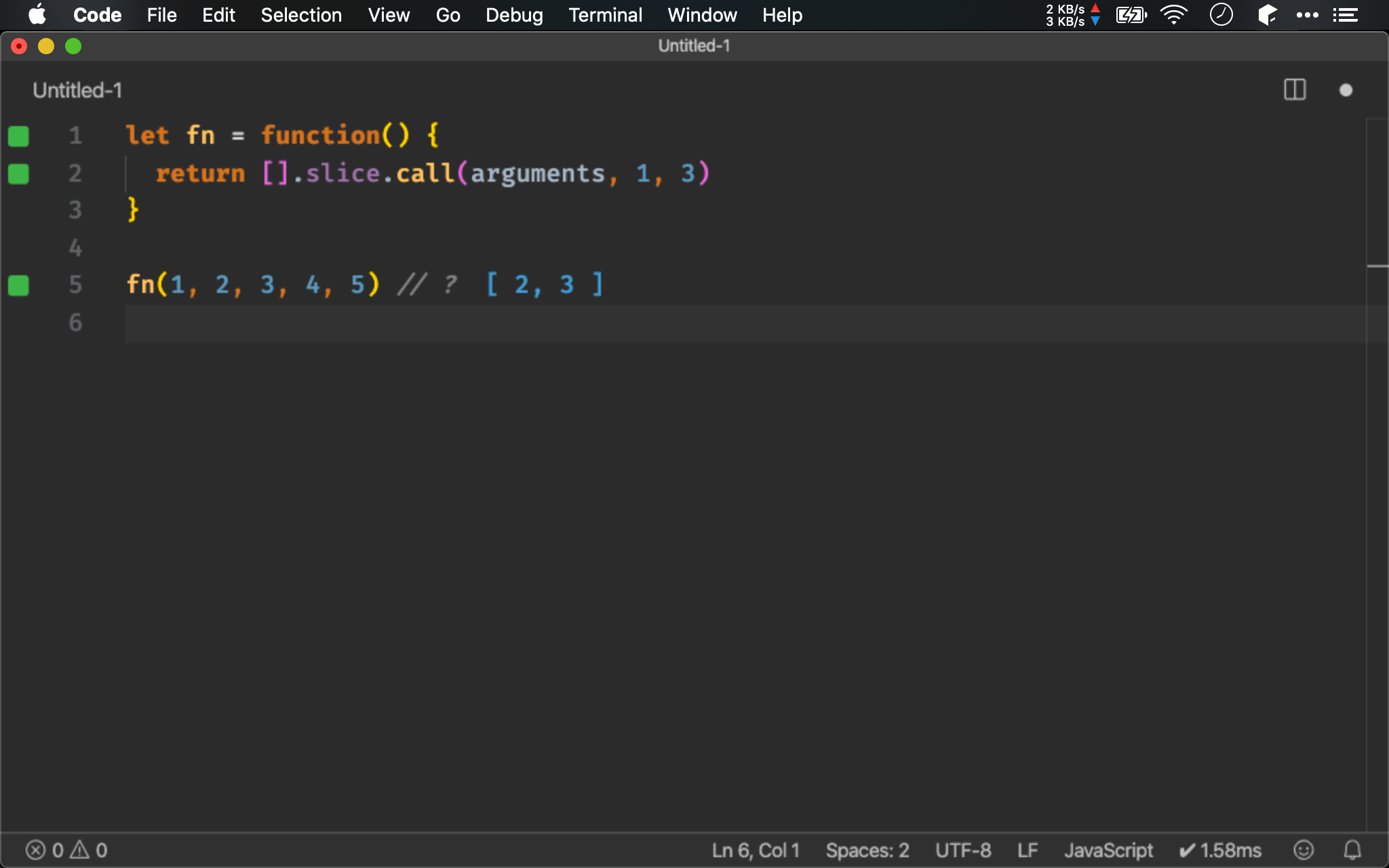
  return [].slice.call(arguments, 1, 3)
}

fn(1, 2, 3, 4, 5) // ?
[] 的 slice() 繼承自 Array.prototype,故也可用 [].slice() 取代之。
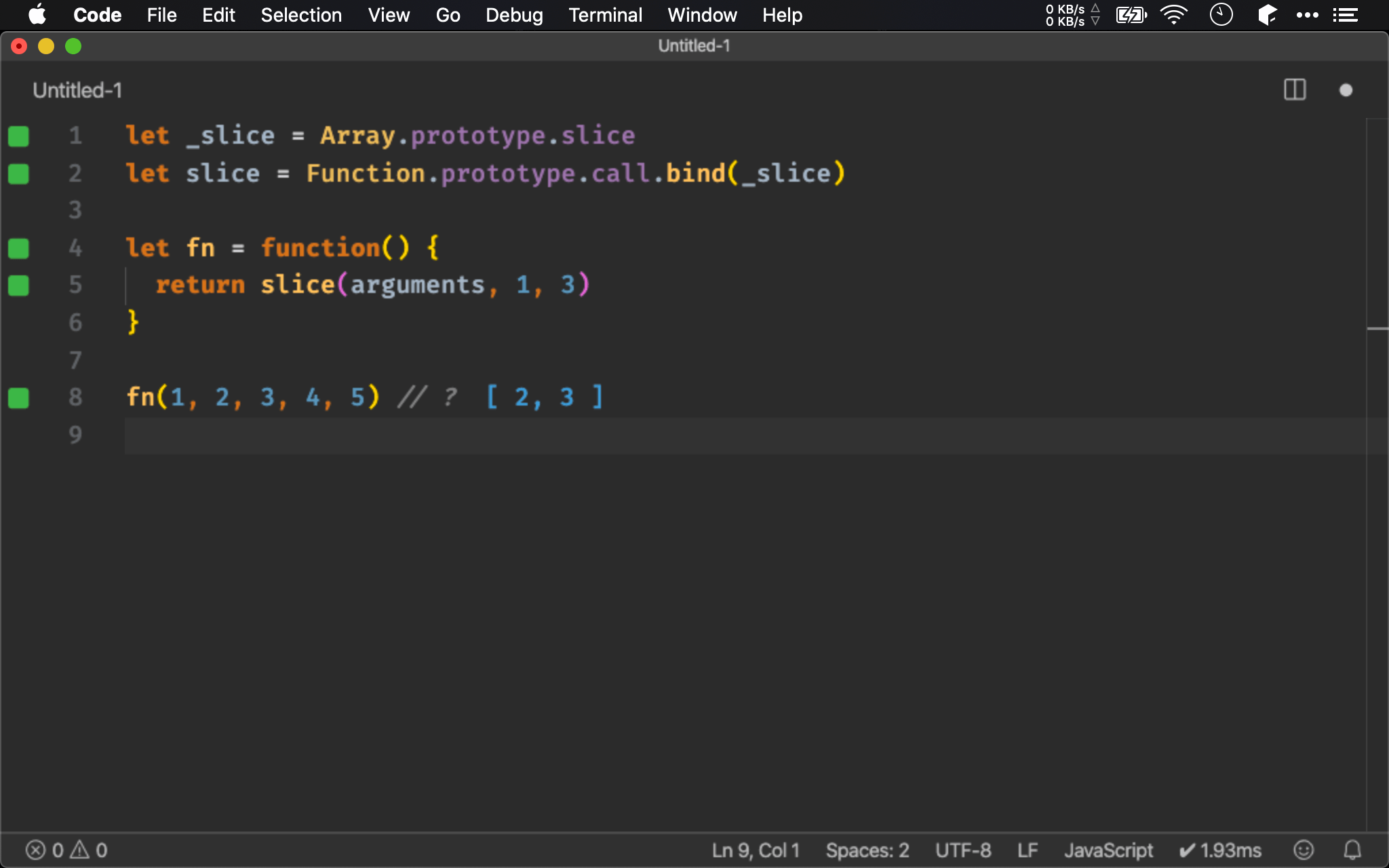
let _slice = Array.prototype.slice
let slice = Function.prototype.call.bind(_slice)

let fn = function() {
  return slice(arguments, 1, 3)
}

fn(1, 2, 3, 4, 5) // ?
Function.prototype.call() 可將 argument 傳給 function 執行,但此時 this 指向 function 為 undefined,需透過 bind() 將 Array.prototype.slice 傳進產生新 function。
此為 ECMAScript 由 method 轉 function 慣用手法
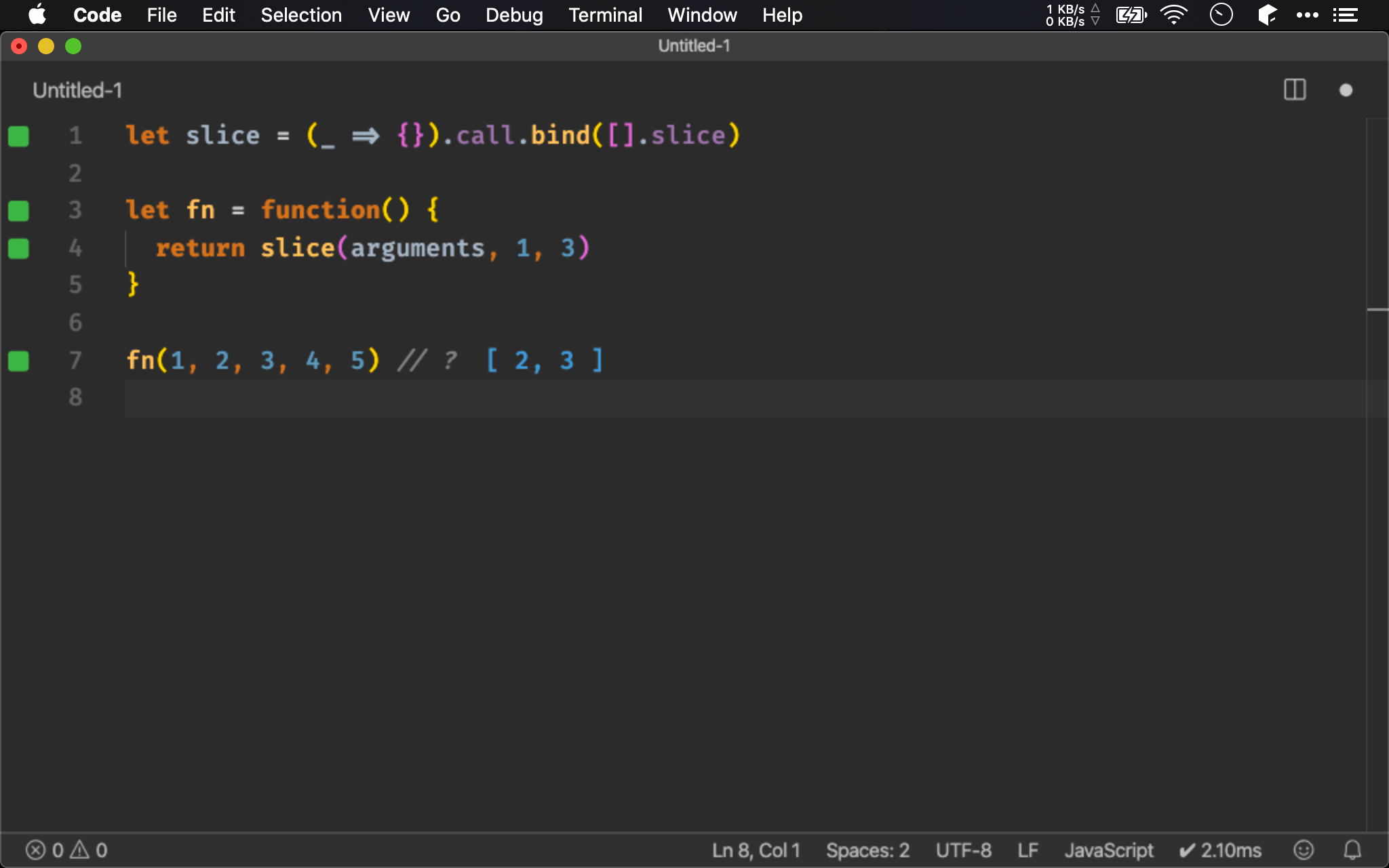
let slice = (_ => {}).call.bind([].slice)

let fn = function() {
  return slice(arguments, 1, 3)
}

fn(1, 2, 3, 4, 5) // ?
Function.prototype 亦可使用 (_ => {}) arrow function 取代,而 Array.prototype 則以 [] 取代。
Conclusion
slice()是真的 copy array,唯 ECMAScript 都是 shallow copy- Array-like object 透過
Array.prototype.[method].call()借用 method 乃 ECMAScript 慣用手法 - 藉由
Function.prototype.call.bind()將 method 轉 function 亦為 ECMAScript 慣用手法